
Understanding Masking in Neurodivergent Students
By Dr Lelanie Brewer, 1 February 2026
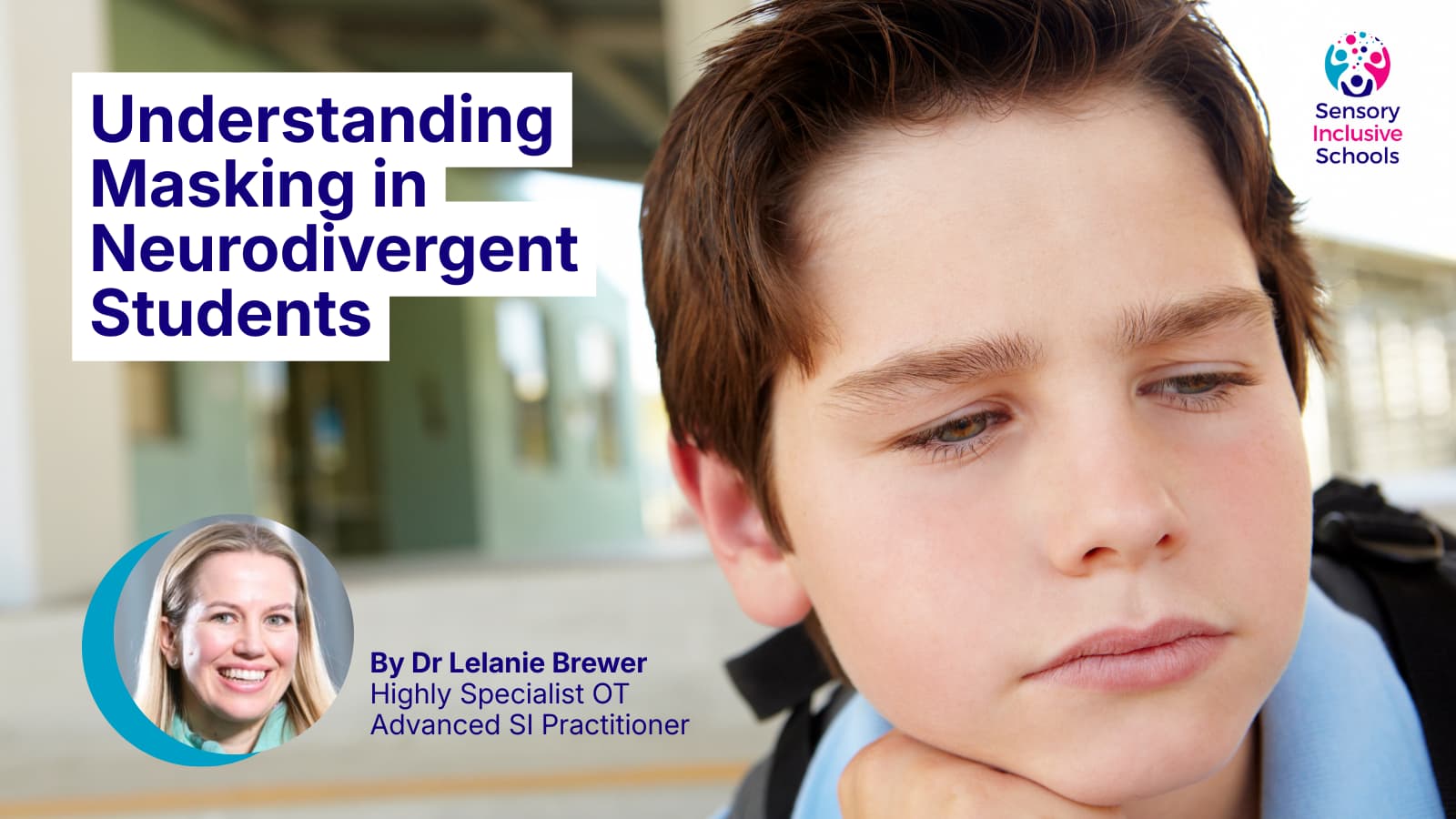
Many neurodivergent students, including autistic students and those with ADHD or sensory processing differences, use a strategy known as masking (also referred to as camouflaging) to cope with the demands of school.
Masking is not simply “good behaviour” or resilience. It is often a high-effort coping strategy that can have a significant impact on a student’s wellbeing, learning, and behaviour.
What Is Masking?
Masking refers to a student consciously or unconsciously changing their natural behaviour in order to fit in or avoid negative attention. In school, this may include:
- Suppressing movement, fidgeting, or sensory-seeking behaviours
- Forcing eye contact or copying peers’ social behaviour
- Staying quiet despite confusion or distress
- Hiding sensory discomfort (noise, lights, touch)
-
Trying very hard to “look calm” or compliant
Masking is most common in structured environments like classrooms, where expectations are clear and constant.
Masking and Mental (and Physical) Wellbeing
Masking places a heavy load on a student’s attention, emotions, and self-regulation. Over time, this can lead to:
- Increased anxiety: Students may be constantly monitoring themselves, worrying about making mistakes, or trying to avoid standing out. This can look like perfectionism, people-pleasing, or withdrawal.
- Emotional Exhaustion: Sustaining self-control all day can be exhausting. Students may appear “fine” at school but have meltdowns, shutdowns, or emotional outbursts once they leave.
- Reduced Confidence: When students feel they must hide who they are, they may begin to believe that their natural responses are unacceptable.
- Physical Signs of Stress: Ongoing masking can affect sleep, increase sensory sensitivity, and lead to headaches, stomach aches, or fatigue.
Masking and Behaviour at School
Masking can make behaviour harder to interpret, and it’s important to remember that masking can look different for all neurodivergent students.
Some students:
- Appear calm and compliant in class
- Work very hard to “hold it together”
-
Release stress later at home (post-school meltdowns)
Others may:
- Reach a breaking point during the school day
- Show sudden outbursts, impulsivity, or distress
-
Be misunderstood as defiant or disruptive
These behaviours are often stress responses, not deliberate choices or children trying to be disruptive.
What This Means for Schools
When supporting neurodivergent students, it is important to look beyond surface behaviour.
Helpful and neuroaffirmative school approaches include:
- Normalising movement (fidgets, wobble cushions, movement breaks)
- Offering quiet or low-sensory spaces
- Allowing flexible communication (not insisting on eye contact or verbal responses)
- Providing clear routines and advanced warning of changes
-
Recognising that “coping in school” does not mean a student is not struggling
Sharing information with families about how students manage during the school day is essential, as behaviour at home may look very different.
Working With Families
Families often see the effects of masking after school. Schools can support parents and carers by:
- Acknowledging post-school exhaustion and distress
- Avoiding assumptions about parenting or consistency
- Collaborating on realistic expectations and adjustments
-
Reducing unnecessary demands where possible
Key Message for Schools
Masking is a sign that a student is trying very hard to cope, not that they do not need support. By reducing the need for masking and supporting regulation throughout the school day, schools can improve wellbeing, behaviour, engagement, and learning for neurodivergent students.
By Dr Lelanie Brewer
Highly Specialist Occupational Therapist, Advanced Sensory Integration Practitioner, PhD, MScOT, BSc, FHEA
References:
Chapman, L., Rose, K., Hull, L., & Mandy, W. (2022). “I want to fit in… but I don’t want to change myself fundamentally”: A qualitative exploration of the relationship between masking and mental health for autistic teenagers. Research in Autism Spectrum Disorders, 99, 102069. https://doi.org/10.1016/j.rasd.2022.102069
Evans, J. A., Krumrei-Mancuso, E. J., & Rouse, S. V. (2024). What you are hiding could be hurting you: Autistic masking in relation to mental health, interpersonal trauma, authenticity, and self-esteem. Autism in Adulthood, 6(2), 229–240. https://doi.org/10.1089/aut.2022.0088
Lei, J., Cooper, K., & Hollocks, M. J. (2024). Psychological interventions for autistic adolescents with co-occurring anxiety and depression: Considerations linked to autism social identity and masking. Autism in Adulthood, 7(6), 663–670. https://doi.org/10.1089/aut.2024.0005
Lösel, F., Stemmler, M. and Bender, D. (2025), Different Pathways of Externalising Behaviour Problems From Preschool to Youth: A Test of Risk and Protective Factors and Potential Origins. Crim Behav Ment Health, 35: 10-21. https://doi.org/10.1002/cbm.2370
Mandy, W. (2019). Social camouflaging in autism: Is it time to lose the mask? Autism, 23(8), 1879-1881. https://doi.org/10.1177/1362361319878559