Reflections From the SIS Network: The PEO Model
By Beth Smithson, 12/01/26
In our first Sensory Inclusive Schools virtual peer support drop-in session of 2026, we reflected on the PEO model. This sits at the foundation of our teaching.
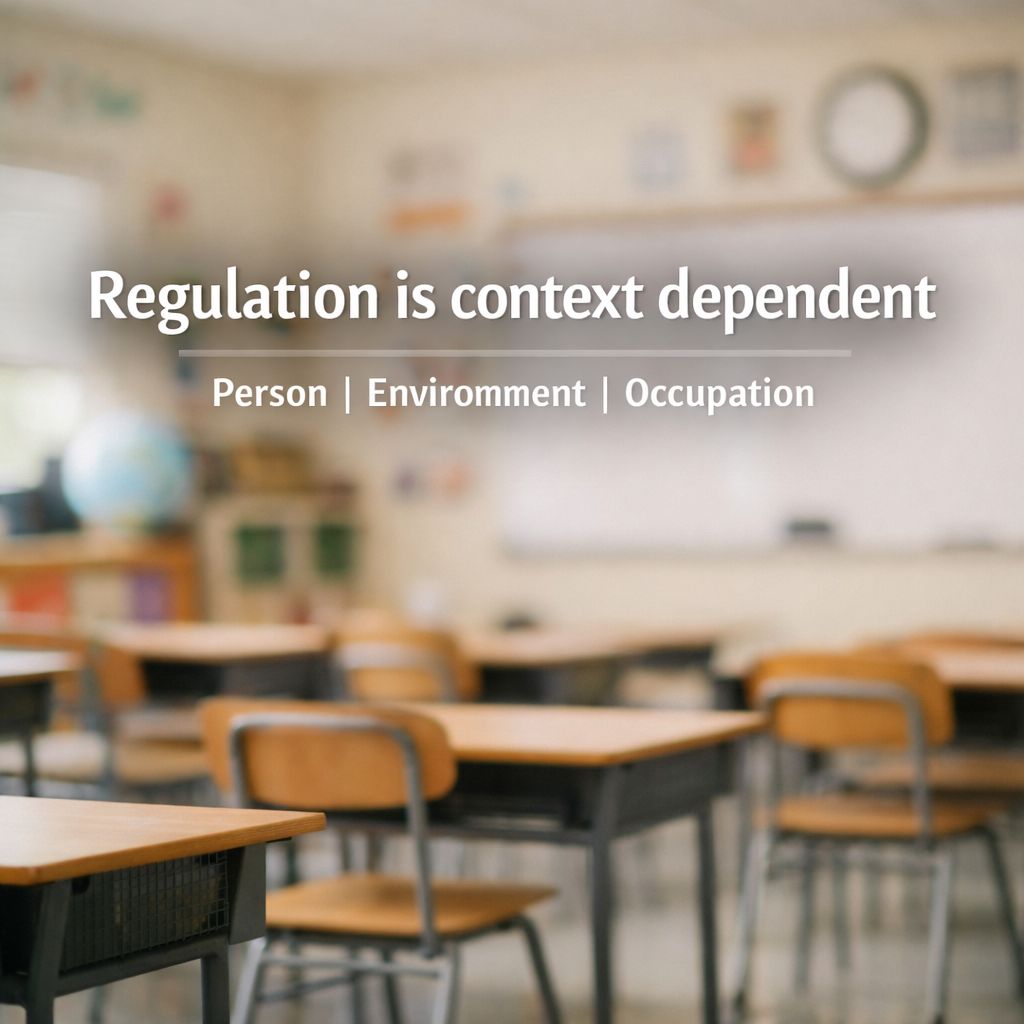
We are not isolated nervous systems walking around on our own. Regulation happens in the real world, shaped by the interaction between the Person, the Environment they are in, and the Occupation (task) they are being asked to engage in.
Person
The individual’s sensory system, stress load, health, sleep, hunger, predictability needs, communication profile, motor skills, trauma history, and what their body is carrying in that moment.
Environment
The sensory features of the space, the people, the noise, the lighting, the crowding, the layout, and whether there is a clear flight path.
Occupation
What the student is being asked to do right now, how long it lasts, how complex it is, how quickly it needs to be done, how much social demand it carries, pacing, order, importance, meaning and whether the task matches the student’s modulation or motor abilities. Does it bring the student joy and safety?
When we see a student who appears dysregulated, we need to think in that exact moment:
What is it about the person today, right now?
What is it about the environment, right now?
What is it about the occupation, right now?
Many of us naturally jump to strategies aimed at the person. We reach for sensory tools, a movement break, breathing, a regulation card, a fidget, headphones, time out, or a calm corner.
And sometimes that is exactly what is needed.
But these strategies are often unsuccessful if we use them as a quick fix and then place the student straight back into the same environment, with the same demands, at the same pace, with the same sensory load. A regulation strategy cannot compensate for a mismatch that remains in place.
As you move through the rest of this week, practise one small habit: when you notice dysregulation, pause and quickly run through the PEO model before you respond.
Ask yourself:
Person: What are the student's strengths, and what is their capacity for sensory input today?
Environment: What in this space could be adding threat or demand?
Occupation: What is this task asking of them, and is there another way?
If we can build the habit of considering the PEO model every time we see dysregulation, we stop defaulting to fixing the person and start designing a better fit. That is where regulation and participation become possible.
All the best
Beth
Law, M., Cooper, B. A., Strong, S., Stewart, D., Rigby, P., & Letts, L. (1996). The person-environment-occupation model: A transactive approach to occupational performance. Canadian Journal of Occupational Therapy, 63, 9-23.
Reflections from the SIS Network is a series sharing insights and learning from the weekly term-time drop-in sessions for Sensory Inclusive Schools Network members, capturing the questions, reflections, and practice shifts that promote sensory inclusion in schools.
Beth Smithson is a Paediatric Occupational Therapist and Advanced Practitioner in Sensory Integration. She leads the Sensory Inclusive Schools service and hosts the SIS Network drop-in sessions during term-time. Join us!