Reflections From the SIS Network Rethinking Sensory Circuits
By Beth Smithson, 29/01/26
Sensory circuits came up again in our Sensory Inclusive Schools Network drop-in session, as they often do.
I want to be clear: this is not an anti sensory circuit message. Sensory circuits can be brilliant. My reflection is simply that, like any intervention, they work well or poorly depending on how they are delivered, and we spent time discussing this.
A sensory circuit is often described as three parts: alerting, organising and calming (also, I tend not to use the word calm). Below are some of the key topics we discussed:
What does that individual nervous system need now to feel safe and engage?
The question is not “Have they done alerting, then organising, then calming?” The question is “What does this student need right now?”
Some students may need alerting. Others may need to go straight to organising. Others may need support to settle and feel safe before they can engage at all.
Choice is central.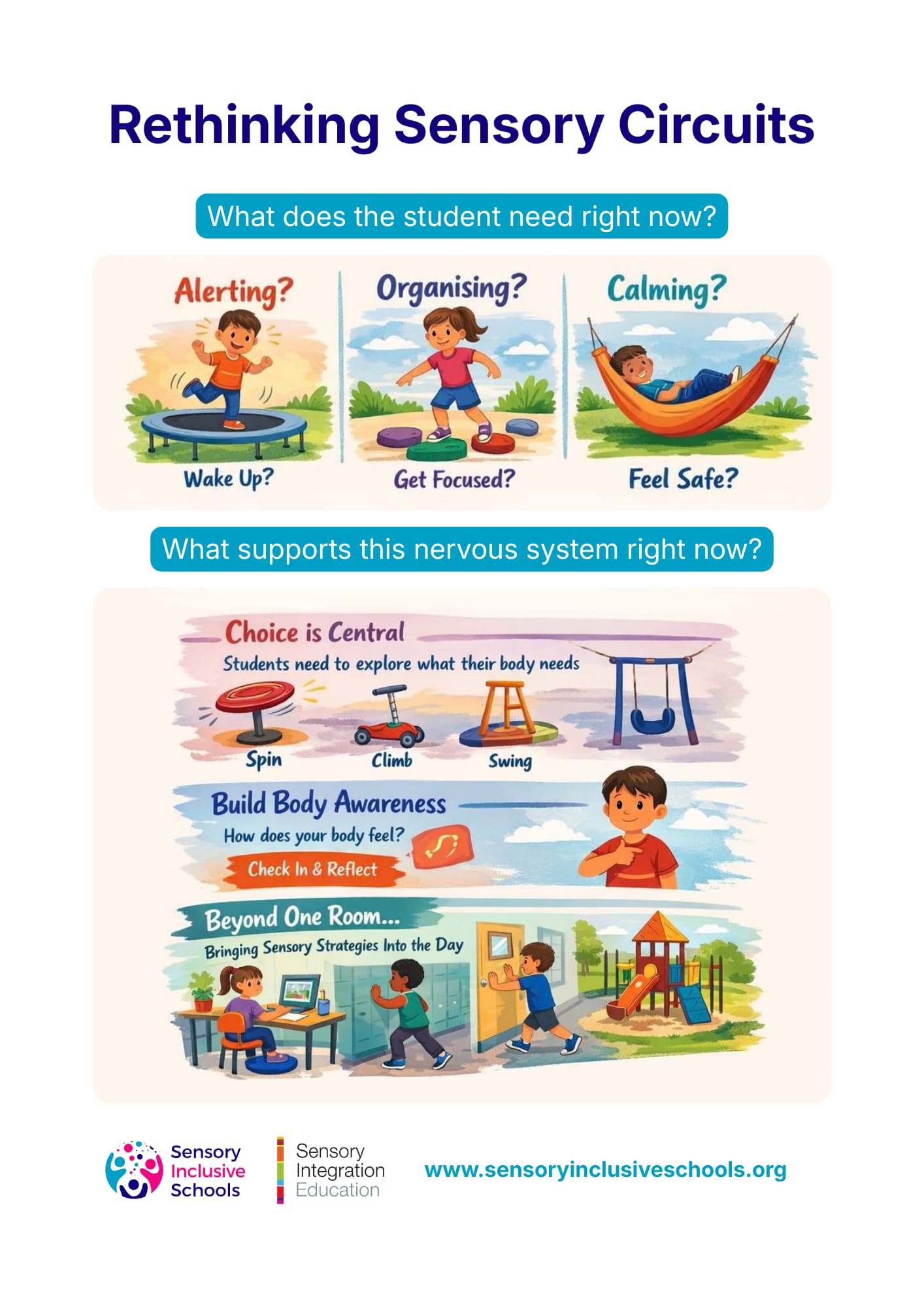 Ayres Sensory Integration theory reminds us that active engagement at the 'just right' level of challenge and choice sits at the heart of meaningful change and development of new skills. So, within circuits, students should be allowed to explore what their body needs in that moment. That might mean staying with one activity for the whole circuit, or doing an activity in a different way because that is their 'just right' challenge. We need to remember these guiding principles.
Use the time as an opportunity to experience how sensory input makes your body feel - expand sensory opportunities.
We also talked about meaningful check-ins. Ask the student how their body feels at the start in whatever way is accessible to them, then check in again afterwards. Over time, this helps them notice shifts, what sensory experiences work for them and builds self-awareness and self-advocacy.
Sensory circuits should not live in one room at a set time.
Circuit time can help us discover what works, but the real impact comes when we embed those sensory joys and sensory activities across the day and the student is encouraged to advocate for what they need, when they need it.
This is just a snapshot of our discussion. Those who are part of the SIS Network can find a longer post in the SIS Community Forum - we would love you to join us!
All the best
Beth
PS: You are welcome to Rethinking Sensory Circuits.pdf.
Reflections from the SIS Network is a series sharing insights and learning from the weekly term-time drop-in sessions for Sensory Inclusive Schools Network members, capturing the questions, reflections, and practice shifts that promote sensory inclusion in schools.
Beth Smithson is a Paediatric Occupational Therapist and Advanced Practitioner in Sensory Integration. She leads the Sensory Inclusive Schools service and hosts the SIS Network drop-in sessions during term-time. Join us!