Reflections From the SIS Network: Interoception - When the Outside World Is Too Loud to Hear the Inside World
By Beth Smithson, 29/04/26
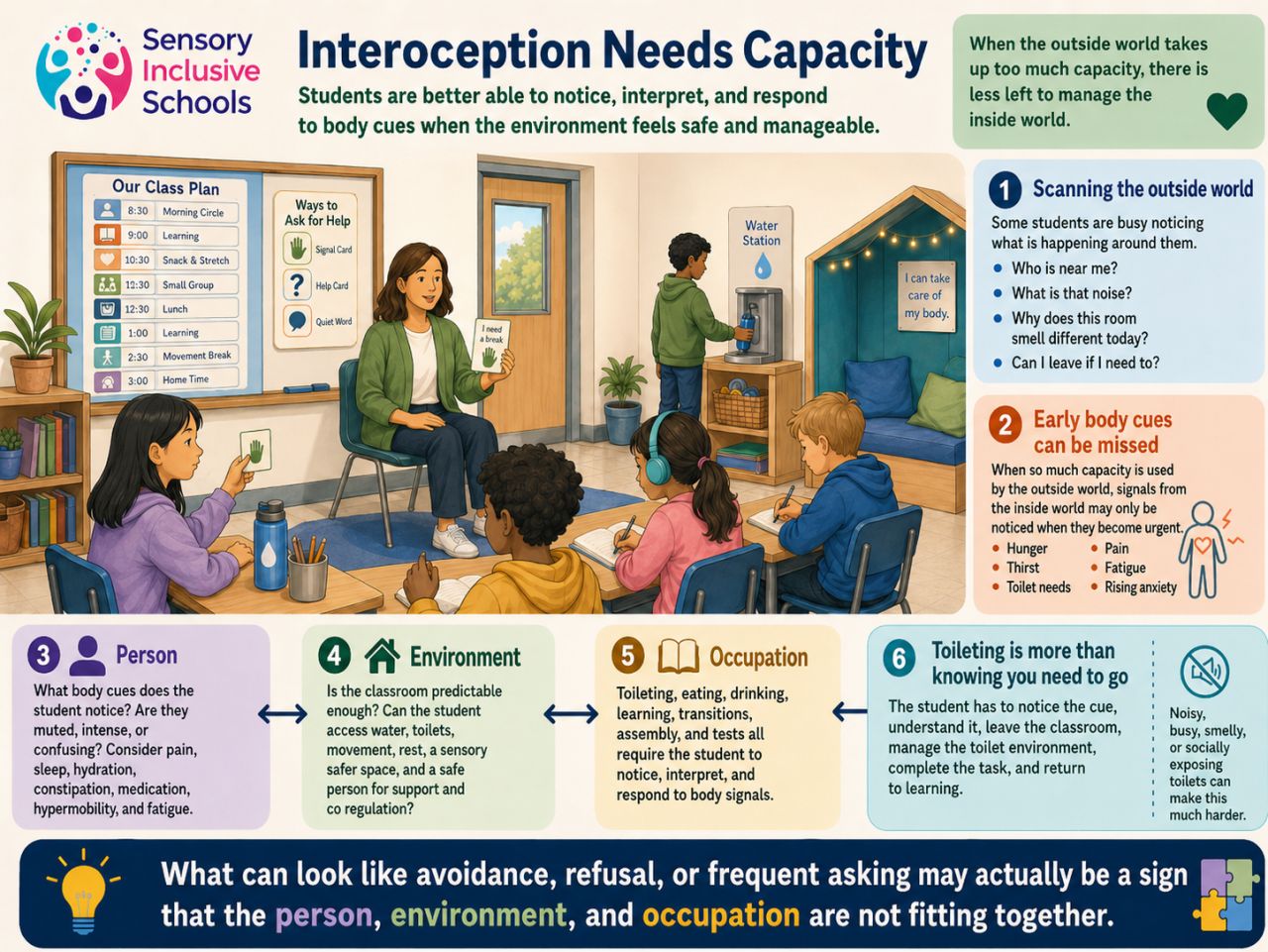
Following our workshop, our Sensory Inclusive Schools drop-in session this week also had an interoception vibe.
Some students find noticing or responding to their internal body cues difficult, and this is made harder when managing the outside world takes up so much capacity that there is very little left for them to manage their inside world.
Their nervous system may be busy scanning the environment.
Who is near me?
What is that noise?
Why does this room smell different today?
Can I leave if I need to?
Will I get told off?
What will other people think?
When a student is using this much capacity to monitor the world around them, early body cues may be missed. Hunger, thirst, needing the toilet, pain, fatigue or rising anxiety may only be noticed when the signal becomes urgent, intense or overwhelming.
This is where the Person Environment Occupation (PEO) model can help.
We need to think about the person. What body cues does the student notice? Are those cues muted, intense or confusing? Are there medical or physical factors to consider, such as constipation, hydration, medication, pain, sleep, hypermobility or fatigue?
We need to think about the environment. Is the classroom predictable enough? Are the toilets accessible and tolerable? Can the student get water when they need it? Can they move, rest or access a sensory safer space before they reach crisis? Can they ask for help without shame or public attention? Is there a safe person I can turn to for support and co-regulation?
We also need to think about the occupation. Toileting, eating, drinking, learning, moving between lessons, joining assembly, sitting in a test and managing a full school day all require the student to notice, interpret and respond to body signals.
Toileting is a good example. It is not just about knowing that you need to go. The student has to notice the cue, understand it, act on it, leave the classroom, manage the toilet environment, complete the task and return to learning. If the toilets are noisy, smelly, busy or socially exposing, the student may avoid them. If they can not manage their tights or undo their buttons, the occupation may be too hard for them to complete.
What may look like avoidance, refusal, or frequent asking may actually be a sign that the person, environment and occupation are not fitting together.
Together we discussed the question: How can we create an environment where this student has enough capacity to notice, interpret and respond to their body cues with dignity?
Join us!
Best wishes
Beth