Participation as the Outcome
By Beth Smithson, 01/10/2026
At a recent Sensory Inclusive Schools drop-in session, we focused on making sure that the sensory-based interventions we select are actually supporting the participation goals of the student.
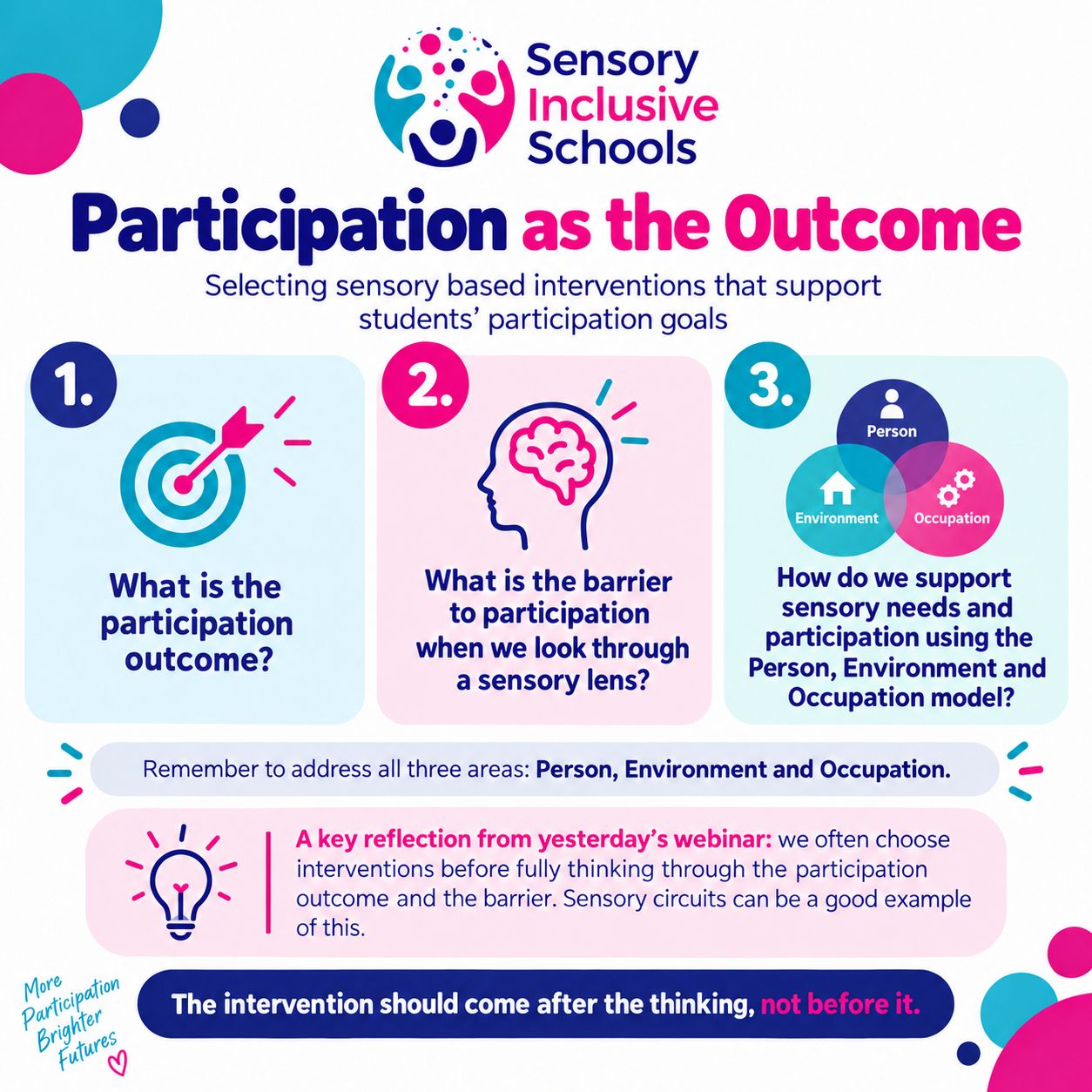
For each of the cases brought to the session, we asked:
- What is the participation outcome?
- What is the barrier to participation when we look at it through a sensory lens?
- How do we support sensory needs and participation using the Person, Environment and Occupation model?
- And importantly, we need to remember to address all three areas: the Person, the Environment and the Occupation.
Working through the cases in this way helped us stay focused on the reason for intervention in the first place: supporting meaningful participation.
It helped us move away from broad aims such as “make this student more regulated” and instead think about what the student actually needs or wants to participate in, what may be getting in the way, and what we can change to support that participation.
It also helps us select sensory-based interventions that are linked to meaningful goals. A big goal such as “make this student more regulated” can feel difficult to know what to do with (think about those HUGE EHCP goals).
This was also one of the key points from my Sensory Circuits webinar last month. Very often, we choose an intervention before we have fully thought through the participation outcome or the barrier we are actually trying to address. Sensory circuits can be a good example of this. A student is struggling to participate, so a sensory circuit is put in place. But have we first asked what participation we are trying to support? Have we understood the barrier? And have we considered whether the intervention actually matches that need? The intervention should come after that thinking, not before it.
On a personal note, the drop-in was a fun, vibrant session - hope you can join us for future ones!